Infrared Sauna vs. Traditional Sauna: Which Is Better for Recovery?
If you're trying to decide between an infrared sauna and a traditional sauna for recovery, you're not alone — it's one of the most common questions we get at the Recovery Room. And honestly, the answer isn't as straightforward as most websites make it seem.
Here's the real comparison, including what the research actually supports, where the evidence is still thin, and why we chose infrared for our Recovery Room at Body Aligned in Tampa Heights.
The Basic Difference: How Each One Heats Your Body
Before we get into benefits, it helps to understand what's actually happening in each type of sauna, because they work in fundamentally different ways.
Traditional saunas heat the air around you — usually to somewhere between 170-200°F. You sit in a very hot room (often with steam from water poured over heated rocks), and the hot air warms your body from the outside in. It's intense. Your heart rate climbs, you sweat heavily, and for many people it feels like a serious endurance event.
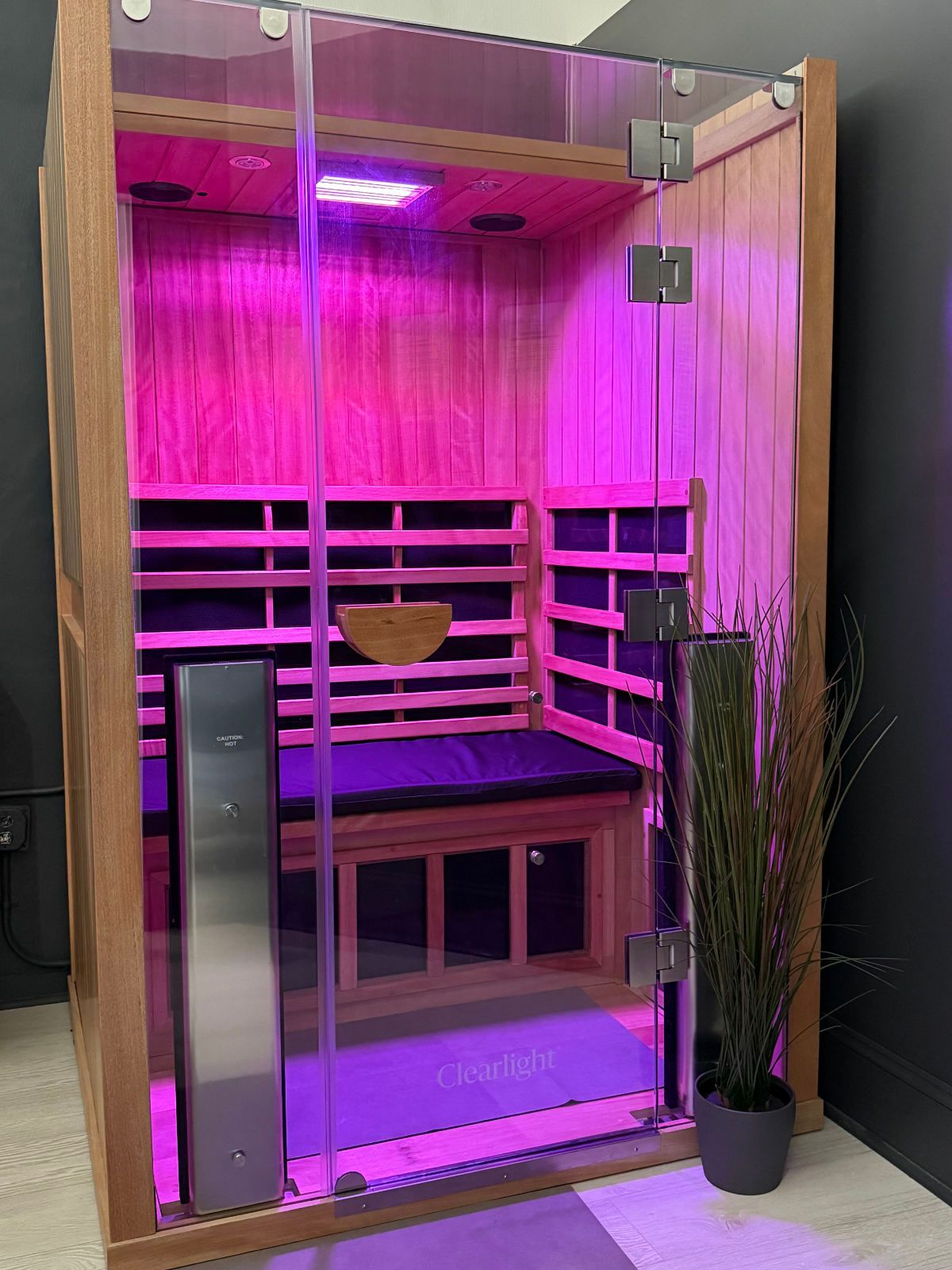
Infrared saunas skip the hot room entirely. Instead, they use infrared light waves to heat your body directly — similar to how sunlight warms your skin, but without UV radiation. The room temperature sits much lower, typically 120-140°F, but the infrared energy penetrates into your tissues. You still sweat (a lot, actually), but the experience feels gentler because you're not breathing superheated air.
The practical difference? Most people can comfortably stay in an infrared sauna for 30-45 minutes, while traditional saunas often become uncomfortable after 15-20 minutes. That matters for recovery, because longer sessions mean more time for the therapeutic effects to work.
What the Research Actually Says About Sauna Recovery Benefits
Here's where we want to be straight with you — there's a lot of marketing noise around saunas, and the science is more nuanced than most wellness blogs admit.
What both types do well (with solid evidence):
Both infrared and traditional saunas increase your heart rate and blood flow, which is the primary mechanism behind their recovery benefits. The Mayo Clinic has noted that sauna bathing is associated with reduced muscle soreness, improved circulation, and temporary pain relief. A review published in Mayo Clinic Proceedings found associations between regular sauna use and cardiovascular benefits, reduced inflammation, and improved recovery markers.
Where infrared may have an edge:
The Cleveland Clinic reports that infrared saunas may offer some advantages for people who can't tolerate extreme heat — the lower air temperature makes sessions more accessible while still producing a deep sweat. Some research suggests the infrared wavelengths penetrate deeper into muscle tissue than convective heat alone, which could mean better targeted relief for sore muscles and joints.
The honest gap in the research:
Here's what most comparison articles won't tell you: there aren't many high-quality studies that directly compare infrared vs. traditional saunas head-to-head for recovery outcomes. Most sauna research has been done on traditional Finnish saunas (particularly the large Finnish population studies), while infrared sauna research is newer and has smaller sample sizes. Both show benefits, but claiming one is definitively "better" than the other isn't supported by the current evidence.
What we can say: both types promote recovery through increased circulation and heat stress. The best sauna for you is the one you'll actually use consistently — and for many people, that's infrared because it's more comfortable.
Infrared vs. Traditional: A Practical Comparison
Rather than repeating temperature stats, here's what actually matters when you're choosing between the two:
Comfort and accessibility: Infrared wins for most people, especially beginners. The lower air temperature means you can breathe normally, stay in longer, and don't feel like you're suffocating. If you've tried a traditional sauna and thought "that's not for me," infrared is worth another shot.
Session length: Traditional sauna sessions typically run 10-20 minutes because the heat becomes overwhelming. Infrared sessions comfortably run 30-45 minutes. More time in the sauna generally means more circulatory benefit.
Sweat experience: You'll sweat in both. Traditional saunas produce surface-level sweat quickly due to the extreme air temperature. Infrared saunas produce a deeper, slower sweat that many people describe as "more thorough." Both are effective at promoting detoxification through sweat.
Recovery feel: Traditional saunas leave many people feeling drained afterward (the intense heat is genuinely exhausting). Infrared sessions tend to leave you feeling relaxed but not wiped out — which matters if you're using it as part of a training recovery routine and still need to function afterward.
Respiratory comfort: If you have any breathing sensitivities — allergies, asthma, or just general discomfort in very hot air — infrared is significantly easier on the lungs. You're not inhaling 190°F air.
Why We Chose Infrared for the Recovery Room
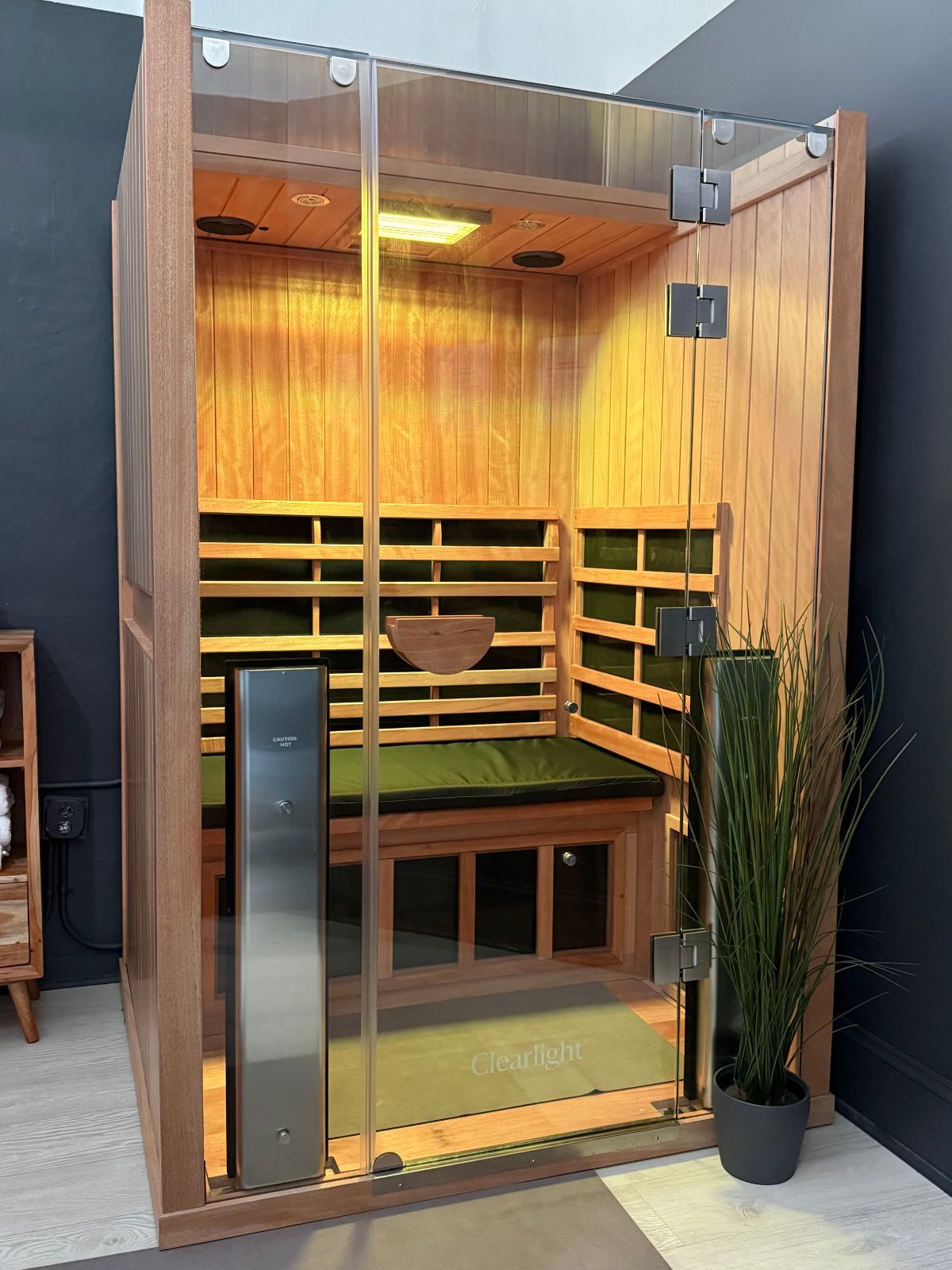
When we built out the Recovery Room at Body Aligned at 405 E. Oak Avenue in Tampa Heights, we evaluated both options. We went with infrared for a few practical reasons:
Most of our clients are combining sauna with other recovery modalities — cold plunge, red light therapy, salt therapy. Infrared's gentler approach means clients can do a full recovery circuit without being completely drained after the sauna portion.
The lower temperature is more accessible for first-timers. Since we serve everyone from competitive athletes to people who've never tried any recovery therapy, we needed something that wouldn't scare off newcomers.
And frankly, in Tampa's heat and humidity, most people don't want to sit in a 200°F room. Infrared gives you the recovery benefits without the punishing air temperature — which goes a long way in a city where you're already battling heat all day.
Pairing Infrared Sauna With Cold Plunge (Contrast Therapy)
Here's where things get really interesting — and where Body Aligned's Recovery Room setup gives you something most places can't offer.
When you alternate between the infrared sauna and a cold plunge, you're doing contrast therapy. The heat dilates your blood vessels, the cold constricts them, and the cycle creates a powerful pumping effect that flushes metabolic waste from your muscles more effectively than either modality alone.
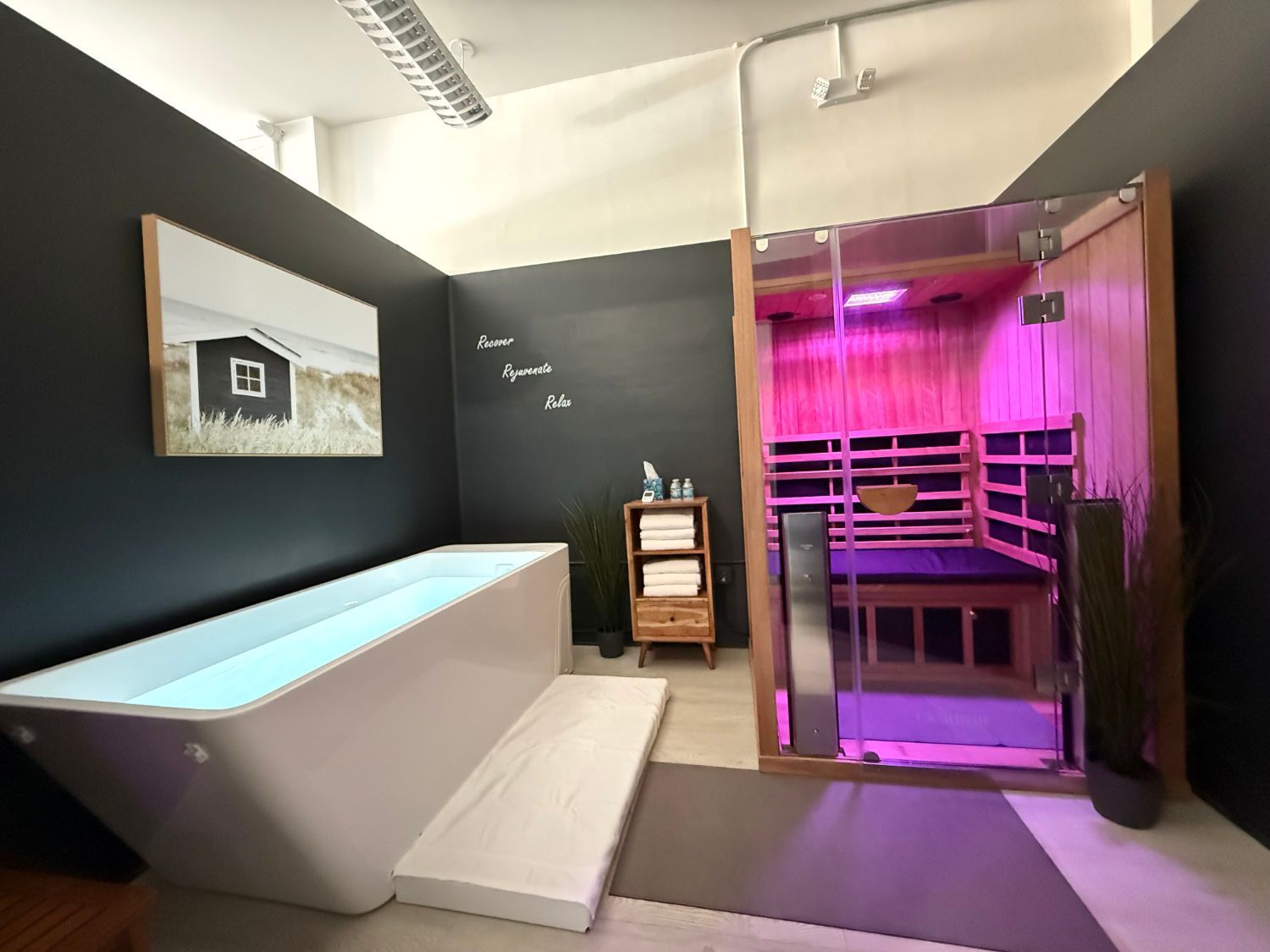
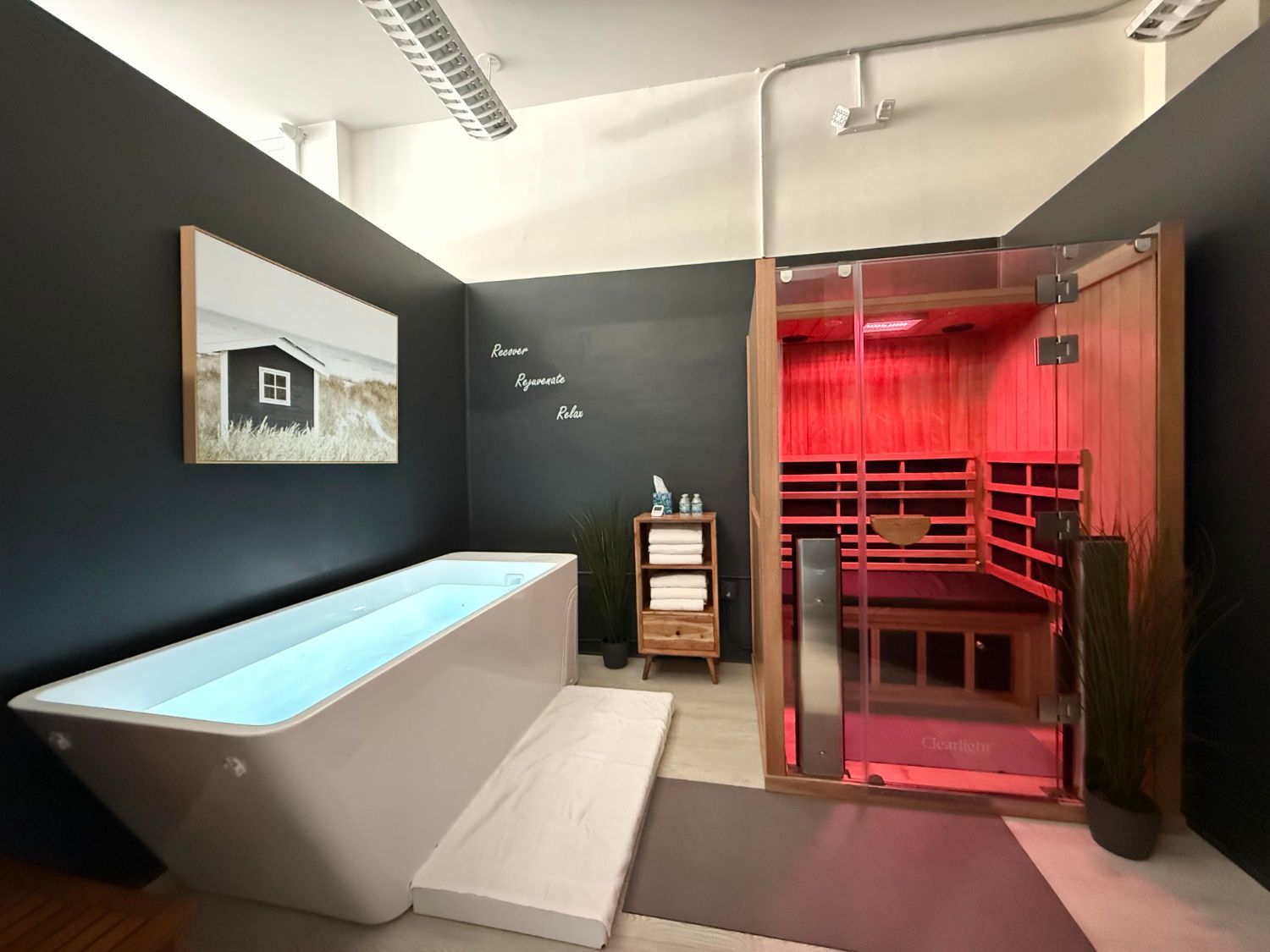
This hot-cold combination is one of the most requested recovery protocols at our Tampa Heights studio, and it's one of the main reasons we designed the Recovery Room with both modalities in the same space. You can move between sauna and cold plunge without leaving the room.
If you're curious about the cold plunge side of this equation, we have a full guide: Your First Cold Plunge in Tampa: What to Expect.
What to Expect During Your Infrared Sauna Session
If you haven't tried an infrared sauna before, here's what a session at Body Aligned looks like:
When you arrive at the Recovery Room (405 E. Oak Avenue, Tampa Heights), we'll check in with you about any health concerns and get you set up in the private sauna room. You'll get a clean towel and water — hydration is important.
During your session (typically 30-45 minutes), the temperature will be set between 120-135°F. You'll start to sweat within the first 10-15 minutes. Many clients bring headphones to listen to music or a podcast. The heat builds gradually, so you won't feel like you've walked into a wall of hot air.
Afterward , you'll feel warm, relaxed, and usually in a noticeably better mood. Many of our clients follow up with a cold plunge for contrast therapy, or a red light therapy session to double down on inflammation reduction.
The whole experience is designed to fit into your day — you don't need to block out your entire afternoon.
Frequently Asked Questions
How often should I use an infrared sauna for recovery?
For most people, 2-3 sessions per week is the sweet spot. Athletes during heavy training blocks sometimes bump up to 3-4 times weekly. Consistency matters more than frequency — three sessions every week beats five sessions one week and none the next. Always hydrate well before, during, and after.
Is it safe to use the sauna during pregnancy?
No — neither infrared nor traditional saunas are recommended during pregnancy. The American College of Obstetricians and Gynecologists advises against activities that raise core body temperature significantly. If you're pregnant, talk to your healthcare provider. At Body Aligned, we can suggest alternative recovery options that are safe for expectant mothers.
Can I bring my phone into the infrared sauna?
Yes — the lower temperature in an infrared sauna (120-140°F) is generally safe for electronics. Many of our clients at the Recovery Room bring their phones to listen to music, podcasts, or just scroll while they sweat. In a traditional sauna at 190°F+, your phone would be at serious risk of overheating.
How long do the benefits last after a session?
The immediate effects — improved circulation, reduced muscle tension, mood boost — typically last 24-48 hours. Stress reduction and improved sleep quality can carry over for several days. With regular, consistent sessions, many people report cumulative benefits that become their new baseline. Everyone's different, so you'll find your own pattern with consistent use.
Which sauna type is better if I have a medical condition?
Always check with your healthcare provider first. That said, infrared saunas are generally more accessible for people with heat sensitivity, mild respiratory issues, or cardiovascular concerns, simply because the air temperature is significantly lower. At Body Aligned in Tampa Heights, we chose infrared partly because it's the more inclusive option — but a doctor's clearance is always recommended if you have specific health concerns.
I've never tried any sauna — which should I start with?
Infrared, hands down. The lower temperature makes it far less intimidating for first-timers, you can stay in longer without feeling overwhelmed, and you can breathe comfortably the entire time. Many people who "hated saunas" after trying a traditional one discover they actually enjoy the infrared experience. Come try a session at the Recovery Room and see for yourself.
Ready to Try It?
Whether you're a sauna veteran or completely new to heat therapy, the infrared sauna at Body Aligned's Recovery Room is designed to make recovery comfortable and effective. We're at 405 E. Oak Avenue in Tampa Heights — come see the difference for yourself.
Book an infrared sauna session or call us with any questions. And if you want to experience the full recovery circuit — infrared sauna, cold plunge, red light therapy, and salt therapy — we have everything under one roof.
Body Aligned's Recovery Room offers cold plunge, infrared sauna, red light therapy, salt therapy, and contrast therapy — all in one location in Tampa Heights.